About
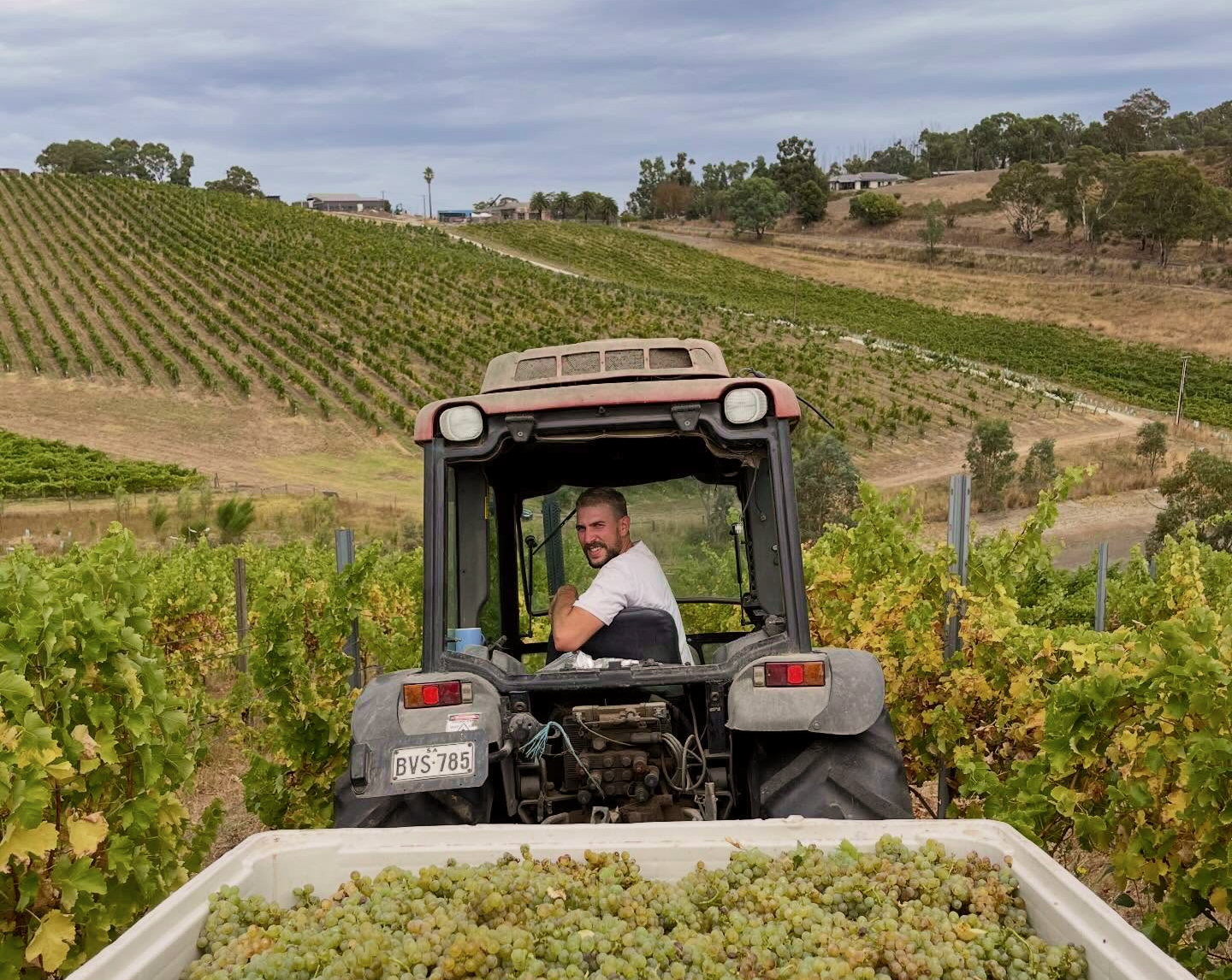
Jean-Baptiste Courdesses was born in Montauban in the southwest of France, and grew up on a fruit farm in the village of Belfort du Quercy, in the Lot. Three generations of his family had worked the same land, moving from dairy cattle to plums and rockmelon as the country changed around them. He was driving tractors at thirteen.
He attended a specialised science high school in the region, the kind built to feed the universities and companies that ringed Toulouse. He enrolled instead in mechanical engineering at university, because Toulouse was an Airbus city and that was where the work was. He lasted two years and left.
What came next was not planned. He found himself in a local wine shop one afternoon and asked the owner whether he needed any help. The shop was ten square metres. The owner said yes. Over the three years that followed, the shop grew to two hundred and fifty square metres, and Jean-Baptiste grew with it. He read constantly. He tasted with the owner most evenings. He sat the sommelier examinations, earning his Master Sommelier Certified diploma along the way. He took a marketing degree alongside the shop work, then a viticulture degree from Bordeaux. He spent time at Château de Lisennes, learning winemaking in a large house with a substantial import portfolio: Austrian wines, German wines, Italian wines, the regions of Europe that don't fit neatly into French conversation. He worked beside Olivier Poussier, the best sommelier in the world in 2000. By the time he left, he carried a sommelier's palate, a viticulturist's education, and a working knowledge of European wine far beyond the country he had grown up in.
He started looking outside France. The pay was poor and France had begun to feel like a country whose wine conversation was looking inward. On October 21st 2015 he flew into Melbourne and found work at City Wine Shop, where the bosses poured samples, the staff studied for Master Sommelier and WSET examinations together, and the city took wine with a seriousness he hadn't expected. Jean-Baptiste earned his WSET Level 3 with merit during his time there. From there he moved in every direction. He met Ricky Evans of Two Tonne Tasmania over the bar at City Wine Shop and ended up in the Tamar Valley helping plant a new vineyard from the ground up. He moved to Hobart for a brief stint, worked at the restaurant called Ettie's, then north to Sydney and 10 William Street. He returned to Europe for a vintage at Weingut Bründlmayer in Austria's Kamptal, then drove three weeks home through Slovenia, northern Italy, Burgundy, the Rhone, Beaujolais and the Jura, tasting his way across every cellar that would open for him. He took a working holiday in Japan and joined Akita Shuso and Terada Honke, two breweries rooted in the oldest sake traditions: rice grown on site, fermentation surrendered entirely to wild cultures, the process as unhurried as the land that produced the grain. He worked at Grape Republic in Yamagata. He spent his evenings at Bunon in Tokyo. He worked at Noma, for the discipline of it.
What brought him back was Basket Range. He had first come up to the village in 2017 to work a harvest eith Gareth Belton at Gentle Folk Wines. That had been the week things settled. The Adelaide Hills offered the elevation, the diurnal range, and the quality of fruit. Basket Range offered something harder to name: a generation of growers and makers who had built one of the most quietly serious winemaking communities in the world, and who seemed to feel no particular need to announce it. He came back in 2019 with the intention of staying.
His first wine came that year at Good Intentions: a Pinot Noir and Cabernet Franc blend made inside the building rather than under any label of his own. The path into organic farming had already been laid by then. The wines he had always been drawn to were made this way, long before Australia found a name for them. He had been drinking them since his early years in France, where the question of what to call them had never seemed to arise. The Rootstock years in Sydney were still alive in his memory. The growers and makers of Basket Range had been working in that tradition for years before he arrived. Organic farming was not, for him, a position or a philosophy. It was the most direct route to fruit that did not need to be corrected in the cellar. Wild yeasts. A small dose of sulphur at bottling. Nothing else.
The years that followed compounded. A full vintage in Savoie, working across the cellars of Adrien and Gilles Berlioz, Sylvain Liotard and Jean-Yves Peron. Picking in Barbaresco with Olek Bondonio. Brewing with Wildflower in Marrickville. He was due in Cahors for harvest in 2020 and instead found himself held in Australia by the border closures. He bottled the 2019, began the first release of Pirate, and moved back to the Hills. He ran three simultaneous vintages: his own, Anton Von Klopper's at Lucy Margaux, and Tom Shobbrook's, alongside two seasons with BK Wines. In 2023 he moved into the old Convent winery, and Jean Bouteille took the shape it has today.
Now in its fifth year, Grand Tour is an East Coast roadshow Jean-Baptiste drives himself, opening the new releases in dinners, parties and tastings from Adelaide through to the cities further east. He runs it the way a band runs a tour: the same wines played in different rooms to different people, the conversation around each bottle something that cannot be repeated. This year's tour carried the first four Single Vineyard wines alongside the High Liner Range, the newer range shown beside the one that came before it for the first time.
What he is trying to do is easy to say and difficult to do: source the finest fruit available in these regions, intervene as little as the vintage allows, and bottle the result in wines that hold and reward time. There are two ranges. The High Liner wines have been there since 2019. Drawn from high quality vineyard sites across the Barossa and Adelaide Hills that Jean-Baptiste has worked closely with for years. They are made to be opened and to give recognition to the farmers whose fruit they carry. The Single Vineyard wines are the newer work. They name a grape and a site. They are made with aging in mind. He waited several vintages before bottling under that name, because he wanted to understand each vineyard before he asked it to speak for itself. They are the precise expression of specific places in the Adelaide Hills and Barossa, made with the conviction that the finest fruit owes the drinker only time.
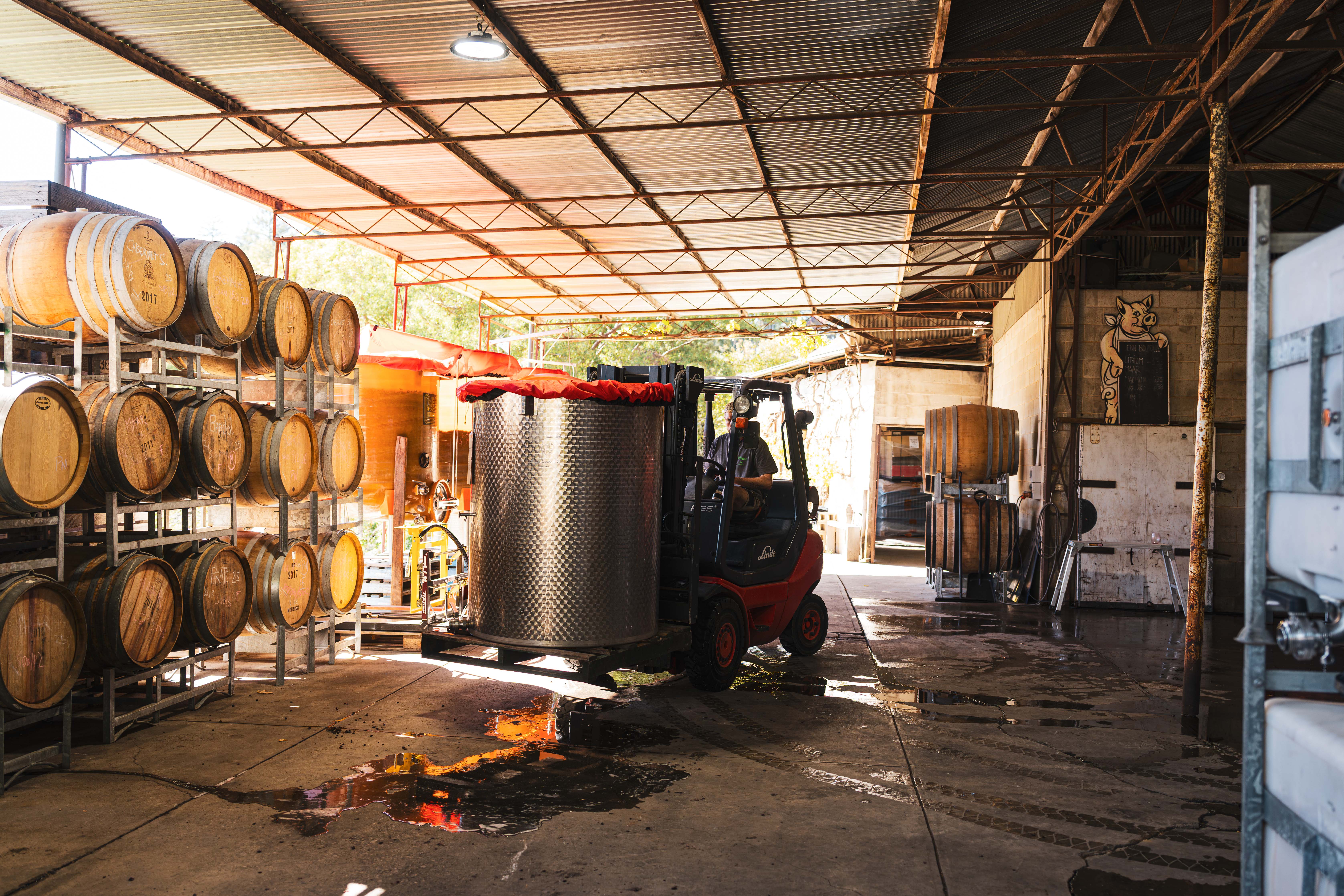
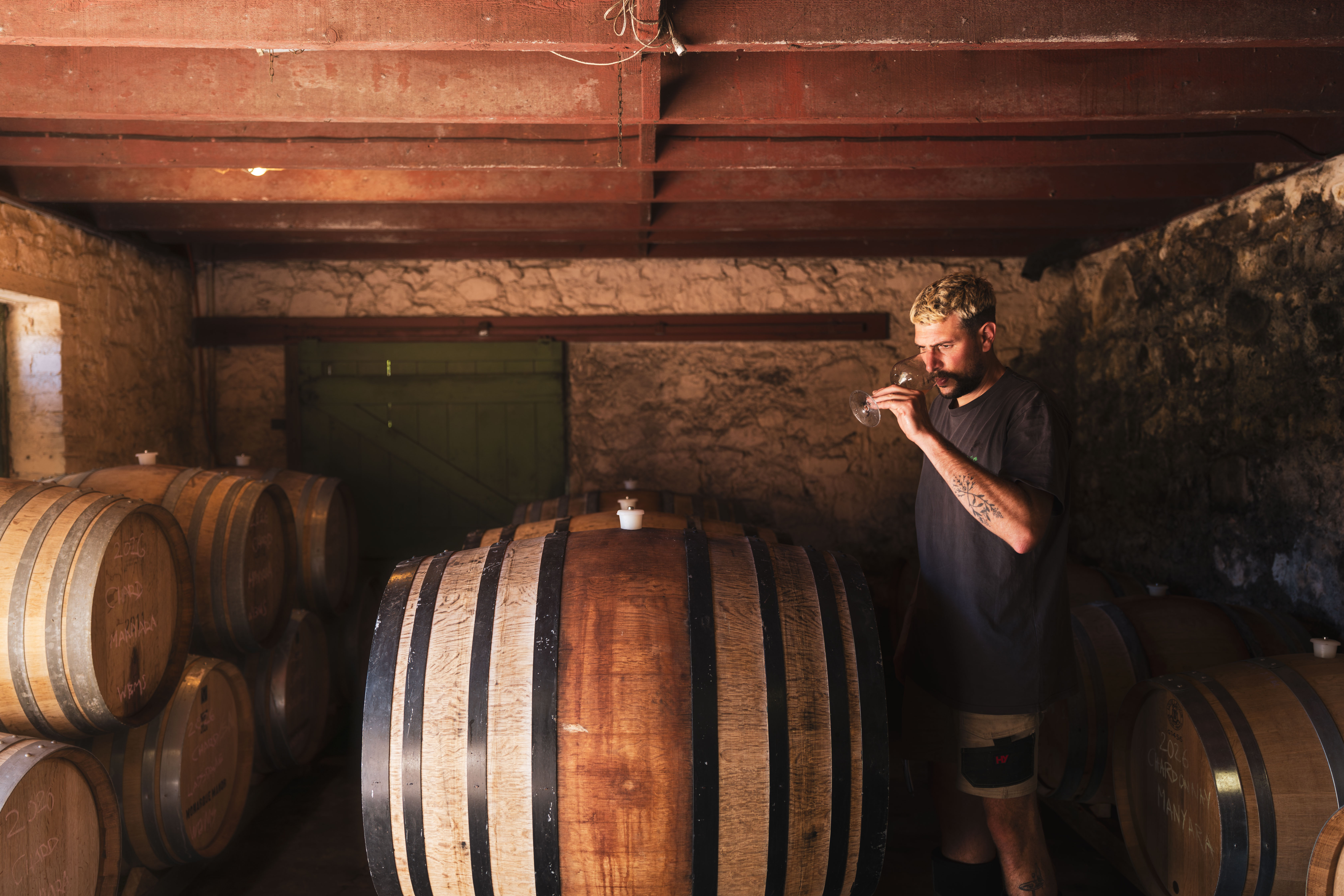
He works now in a stone winery in Basket Range that has held some of the most quietly considered wine made in this country. The vineyards he farms belong to others, as Australian land cannot be his until citizenship comes. France remains in the background: a yearly visit home, the idea of a domaine in the country he grew up in, the language he still reaches for when precision matters most. South Australia is where the work is. Everything he has made has been made alongside the people who opened their doors when there was no reason to: the owner of a ten square metre wine shop in Toulouse who took a chance on someone who knew nothing, the bosses of City Wine Shop, Gareth at Gentle Folk, Ricky Evans, Anton Von Klopper, Tom Shobbrook, BK, James Erskine, every grower whose fruit he buys, and a generation of winemakers in Basket Range who could just as easily have kept their gates closed. Jean Bouteille is the long answer he is writing back to all of them.